Electric Bikes vs Bikes: Which Is Better for You?
If you’re considering a new bicycle, you’ve likely encountered the debate surrounding electric bikes vs bikes. Traditional bicycles have been popular for generations, while electric bikes have rapidly gained popularity among commuters, fitness enthusiasts, and recreational riders. Understanding the differences between electric bikes vs bikes can help you choose the option that best fits your lifestyle, budget, and riding goals.
In this comprehensive guide, we’ll compare electric bikes vs bikes across performance, fitness, cost, maintenance, convenience, and overall riding experience.
Electric Bikes vs Bikes: Understanding the Basics
Before comparing electric bikes vs bikes, it’s important to understand what makes them different.
A traditional bike relies entirely on human power. Every pedal stroke propels the bicycle forward without motor assistance.
An electric bike, commonly called an eBike, includes a battery-powered motor that assists the rider while pedaling. Many electric bikes also feature a throttle that allows riders to accelerate without pedaling.
While both types of bicycles serve similar purposes, the riding experience differs significantly.
Electric Bikes vs Bikes: Speed Comparison
One of the biggest differences in the electric bikes vs bikes discussion is speed.
Electric bikes generally allow riders to travel faster with less effort. Most modern eBikes can reach speeds of 20 to 28 mph depending on their classification and local regulations.
Traditional bicycles depend entirely on rider strength and fitness levels. While experienced cyclists can maintain high speeds, most casual riders travel at slower average speeds.
Speed Comparison Table
| Feature | Electric Bikes | Traditional Bikes |
|---|---|---|
| Average Speed | 15–28 MPH | 8–18 MPH |
| Hill Climbing | Easy | More Challenging |
| Long Distance Riding | Easier | More Physical Effort |
| Commuting Efficiency | Excellent | Moderate |
For commuters and riders covering long distances, electric bikes often provide a significant advantage.
Electric Bikes vs Bikes: Fitness Benefits
Many people assume electric bikes eliminate exercise, but that’s not entirely true.
When comparing electric bikes vs bikes, both provide valuable health benefits.
Traditional bicycles generally offer a more intense cardiovascular workout because the rider performs all of the work.
Electric bikes still require pedaling on most models, allowing riders to remain active while reducing strain on joints and muscles.
Fitness Comparison
| Benefit | Electric Bikes | Traditional Bikes |
| Cardiovascular Exercise | Good | Excellent |
| Calorie Burn | Moderate | High |
| Joint Stress | Lower | Higher |
| Accessibility | Excellent | Moderate |
For riders recovering from injuries or seeking lower-impact exercise, electric bikes can be an ideal solution.
Electric Bikes vs Bikes: Cost Analysis
Cost is another major factor when evaluating electric bikes vs bikes.
Traditional bicycles typically cost less upfront because they do not include batteries, motors, controllers, or electronic systems.
Electric bikes generally require a larger initial investment but may provide greater convenience and transportation value.
Cost Comparison Table
| Expense | Electric Bikes | Traditional Bikes |
| Initial Purchase | Higher | Lower |
| Battery Replacement | Yes | No |
| Charging Cost | Minimal | None |
| Maintenance | Moderate | Low |
Although electric bikes cost more initially, many riders find the convenience worth the investment.
Electric Bikes vs Bikes: Commuting Performance
For daily commuting, the electric bikes vs bikes comparison often favors electric bikes.
Electric bikes allow riders to travel farther while arriving with less fatigue. This is particularly beneficial for individuals commuting to work or school.
Benefits of commuting with an electric bike include:
- Reduced commuting time
- Less physical exhaustion
- Easier hill climbing
- Greater carrying capacity
- Improved accessibility
Traditional bikes remain excellent for shorter commutes and fitness-focused riders.
Electric Bikes vs Bikes: Maintenance Requirements
Maintenance is another important consideration when comparing electric bikes vs bikes.
Traditional bikes have fewer components and are generally easier to maintain.
Electric bikes include additional systems such as:
- Battery packs
- Electric motors
- Controllers
- Displays
- Sensors
Despite these extra components, modern electric bikes are highly reliable and require relatively little maintenance when properly cared for.
Electric Bikes vs Bikes: Environmental Impact
Both electric bikes and traditional bikes are environmentally friendly transportation options.
Compared to automobiles, electric bikes produce significantly fewer emissions and consume far less energy.
Traditional bicycles remain the most environmentally friendly option because they require no electricity whatsoever.
For eco-conscious riders, either choice is far better than relying solely on motor vehicles.
Electric Bikes vs Bikes: Convenience and Accessibility
When discussing electric bikes vs bikes, convenience often becomes the deciding factor.
Electric bikes make cycling accessible to:
- Older adults
- New riders
- Riders with mobility limitations
- Long-distance commuters
- People living in hilly areas
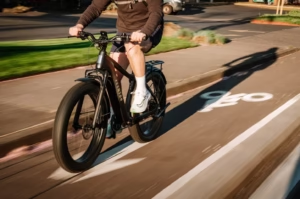
Take every journey further with the Aventon Aventure.3.
The added motor assistance encourages more frequent riding and helps users travel farther with confidence.
Electric Bikes vs Bikes: Which One Should You Choose?
Choose a traditional bike if:
- You prioritize fitness training
- You want the lowest purchase price
- You prefer simplicity
- You enjoy challenging rides
Choose an electric bike if:
- You commute regularly
- You ride long distances
- You want assistance on hills
- You need greater accessibility
- You value convenience and speed
The best choice ultimately depends on your personal goals and riding style.
Electric Bikes vs Bikes: Final Verdict
The debate over electric bikes vs bikes doesn’t have a universal winner. Traditional bicycles offer simplicity, affordability, and excellent exercise benefits, while electric bikes provide convenience, speed, comfort, and accessibility.
For fitness-focused riders, traditional bicycles remain an excellent choice. For commuters, recreational riders, and those seeking a more versatile riding experience, electric bikes often provide greater overall value.
Whether you choose an electric bike or a traditional bicycle, both options offer a fun, efficient, and environmentally friendly way to travel and stay active.